



Dubai United Arab Emirates
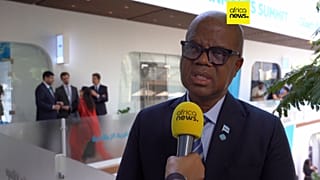
Education has emerged as the primary driver of Africa’s transformation, according to discussions held at the World Government Summit in Dubai. The issue has taken on new urgency as demographic projections show that by 2050, nearly half of Africa’s population will be under the age of 25, placing unprecedented pressure on education systems across the continent.
Laura Frigenti, CEO of the Global Partnership for Education, emphasized that while education requires significant investment, its impact is long-term and often slow to materialize. “Education is a very expensive sector, and its a sector that gives benefits in the long-term. So unfortunately many governments to deprioritize education” she said. She added that the African Union’s decision to declare 2024 the Year of Education has helped strengthen political commitment and focus attention on preparing the next generation for the continent’s development.
Financing remains a major challenge. Policymakers are increasingly advocating a shift away from an aid-dependent model toward innovative financing mechanisms and stronger domestic tax systems to sustainably fund education at scale.
Nigeria, home to Africa’s largest population, is positioning itself as a key driver of this shift. Nigeria’s Minister of Arts, Culture, Tourism and the Creative Economy, Hannatu Musa Musawa, stressed the country’s leadership ambitions. “Nigeria is a global leader,” she said. “If Nigeria works, Africa will work.”


00:03
2026 World Governments Summit: Can Africa’s next decade work for its young people?
01:33
World Governments Summit 2026 in Dubai focuses on the future
00:18
African leaders look to the future at World Governments Summit in Dubai
00:47
US YouTube star IShowSpeed celebrates 21st birthday in Lagos
Go to video
US House passes 3-year AGOA extension but South Africa's inclusion is unclear
01:32
Africa Cup of Nations moves to 4-year cycle